Introduction
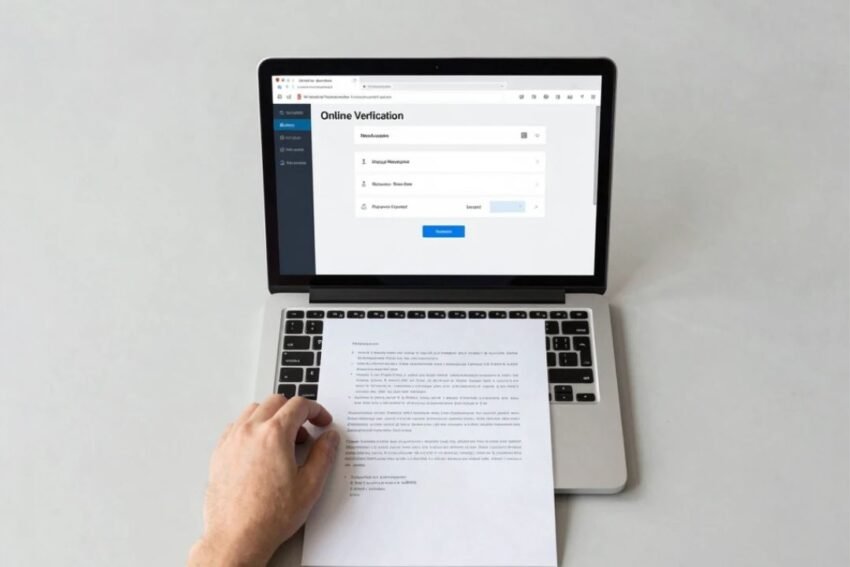
In the digital age, online documents verification has become an important part of education, employment, business, banking, government services, and many other official processes. Instead of visiting an office with physical paperwork, individuals can increasingly submit documents online and have their authenticity and information checked through digital systems.
Online document verification helps organizations confirm that submitted documents are genuine, valid, complete, and connected to the correct person. It can be used to verify identity documents, educational certificates, employment records, professional qualifications, financial documents, and other official records.
For students, graduates, job seekers, employees, and business owners, knowing how to verify documents online can save time and help prevent unnecessary delays. However, the exact procedure differs depending on the organization, country, document type, and reason for verification.
This complete guide explains online documents verification, the documents that can be verified, the step-by-step process, requirements, benefits, common problems, security precautions, and useful tips for completing online verification successfully.
What Is Online Documents Verification?
Online documents verification is the process of checking the authenticity and accuracy of documents through an internet-based platform or digital verification system.
Instead of relying entirely on physical paperwork, organizations may use secure websites, databases, digital records, automated document analysis, QR codes, digital signatures, and other technologies to verify information.
During online verification, a system or authorized person may check:
- Full name
- Date of birth
- Document number
- Expiration date
- Photograph
- Issuing authority
- Qualification details
- Registration number
- Digital signatures
- QR codes or barcodes
- Information stored in official databases
The purpose is to determine whether the document is legitimate and whether its information matches the records provided by the relevant authority.
Why Is Online Document Verification Important?
Online verification provides several advantages for both individuals and organizations.
Prevents Document Fraud
Fake certificates, altered documents, and false identities can create serious problems. Online verification systems can help identify suspicious or inconsistent information.
Saves Time
Applicants may not need to visit physical offices repeatedly. Documents can often be submitted and tracked online.
Reduces Paperwork
Digital submission can reduce the need for physical copies and manual record management.
Improves Accuracy
Automated systems can compare information against databases and identify discrepancies.
Provides Faster Processing
Simple verification checks can sometimes be completed quickly through automated systems, although processing times vary.
Supports Remote Applications
Students and professionals applying to institutions or organizations in different cities or countries may be able to complete parts of the process remotely.
Which Documents Can Be Verified Online?
The types of documents eligible for online verification depend on the organization and its digital infrastructure.
1. Identity Documents
Identity verification is one of the most common online verification processes.
Documents may include:
- National identity cards
- Passports
- Driver’s licenses
- Government-issued identification
- Other approved identity documents
The system may compare the document information with official records or use security features to determine authenticity.
2. Educational Documents
Students and graduates may need to verify:
- Degrees
- Diplomas
- Academic certificates
- Transcripts
- Mark sheets
- Training certificates
- Professional qualifications
Educational verification may involve confirmation from the relevant school, college, university, examination authority, or other recognized institution.
3. Employment Documents
Employers may verify:
- Experience letters
- Employment certificates
- Job titles
- Employment dates
- Previous employer information
- Professional records
This can help organizations confirm that information provided by a job applicant is accurate.
4. Professional Certifications
Certain jobs require specific qualifications or certifications. Professional credentials may therefore need verification before employment or registration.
5. Financial Documents
Depending on the service, organizations may verify:
- Bank statements
- Income records
- Salary documents
- Tax records
- Business documents
Financial verification requirements vary considerably between organizations.
Requirements for Online Documents Verification
Before starting the verification process, applicants should understand the requirements.
Common requirements may include:
Valid Identification
You may need an approved identity document to confirm who you are.
Clear Digital Copies
Documents should be scanned or photographed clearly.
Complete Documents
Make sure all required pages are included.
Accurate Information
Names, dates, registration numbers, and other details should match the information entered into the application.
Valid Documents
Some organizations require documents to be current and unexpired.
Supporting Documents
Additional documents may be required if information is incomplete or inconsistent.
Application Form
Some online verification systems require applicants to complete an electronic form before uploading documents.
How to Verify Your Documents Online: Step-by-Step Guide
The exact process varies, but the following steps provide a useful general guide.
Step 1: Identify the Organization Requiring Verification
First, determine who needs your documents verified.
It could be:
- A university
- An employer
- A government department
- A bank
- A professional organization
- A scholarship provider
- An international institution
The organization should tell you which verification procedure to follow.
Step 2: Visit the Official Website or Portal
Use the official website or authorized online portal provided by the organization.
Avoid clicking verification links from unknown emails, messages, or social media accounts without confirming their authenticity.
This is especially important because identity documents and academic records contain sensitive information.
Step 3: Create an Account if Required
Some platforms require applicants to create an account.
You may need to provide:
- Name
- Email address
- Phone number
- Username
- Password
- Other basic information
Use a strong and unique password when creating an account.
Step 4: Select the Appropriate Verification Service
Some websites offer multiple services. Select the option related to document verification, credential verification, certificate verification, or the specific service you need.
Read the instructions carefully before proceeding.
Step 5: Prepare Your Documents
Before uploading files, check that they are:
- Clear
- Complete
- Readable
- Correct
- Current
- In the requested format
For example, if a certificate has information on both sides, make sure both sides are included if required.
Step 6: Upload the Documents
Upload the requested documents through the official portal.
Common file formats may include PDF, JPG, or PNG, but the accepted formats depend on the platform.
Make sure you select the correct file for each document category.
Step 7: Enter Document Information
Some systems require additional information about each document.
You may need to enter:
- Document number
- Registration number
- Student number
- Date of issue
- Institution name
- Qualification title
- Other identifying information
Check every field before submitting.
Step 8: Complete Identity Verification
Depending on the service, you may be asked to complete an identity check.
This could involve:
- Uploading an identity document
- Entering personal information
- Taking a photograph
- Completing a digital identity check
- Confirming a phone number or email address
The requirements depend on the verification provider.
Step 9: Pay the Required Fee
Some verification services are free, while others charge a processing fee.
Before making a payment, verify that you are using the official payment method.
Keep your payment receipt or transaction reference.
Step 10: Submit the Application
Review the entire application carefully before pressing the final submission button.
Check:
- Name spelling
- Document numbers
- Uploaded files
- Email address
- Phone number
- Application details
Once everything is correct, submit the application.
Step 11: Save the Application Number
After submission, you may receive an application number, tracking number, or confirmation email.
Save this information because it may be needed to check your verification status.
Step 12: Track the Verification Status
Some platforms provide online tracking.
Your application may show statuses such as:
- Submitted
- Under review
- Pending
- Additional information required
- Verified
- Rejected
- Completed
The exact terminology varies between systems.
Step 13: Respond to Additional Requests
If the verification authority asks for additional documents or clarification, provide the required information through the official channel.
Do not ignore requests because doing so may delay the process.
Step 14: Receive the Verification Result
After completing the necessary checks, you may receive a digital verification result, confirmation letter, certificate, report, or another official record.
Save the result for your records if permitted.
Online Educational Document Verification
Online educational document verification is particularly useful for students and graduates.
Universities, employers, scholarship providers, and professional organizations may verify academic credentials before accepting them.
The process may involve checking:
- Degree certificates
- Diplomas
- Transcripts
- Mark sheets
- Student registration numbers
- Graduation dates
- Program information
- Institution details
In some cases, the verification system may contact or access records from the educational institution that originally issued the qualification.
Students should make sure their academic records are accurate and that their names are consistent across their documents.
Online Employment Document Verification
Employers may use online verification to confirm information provided by job candidates.
A company may verify:
- Educational qualifications
- Previous employment
- Professional certifications
- Identity information
- Employment dates
This process can help employers make more informed recruitment decisions.
Job seekers should always provide accurate information on resumes, applications, and supporting documents.
Online Identity Document Verification
Online identity verification is increasingly common for digital services.
An identity verification system may compare information from an identity document with information provided during registration.
Depending on the service, additional checks may be used to confirm that the applicant is the person represented by the document.
Because identity verification involves highly sensitive information, applicants should use trusted and secure platforms.
Benefits of Online Documents Verification
1. Convenience
Applicants can often complete verification from home or another suitable location.
2. Faster Processing
Digital systems can automate certain checks and reduce manual processing.
3. Lower Administrative Costs
Organizations can reduce the paperwork and manual workload associated with physical document processing.
4. Better Record Management
Digital records can be easier to organize, search, and track.
5. Improved Fraud Detection
Technology can help identify suspicious documents and inconsistencies.
6. Remote Accessibility
Online verification can be particularly useful for applicants who live far from verification offices.
7. Application Tracking
Many online platforms allow applicants to monitor the status of their requests.
Common Problems With Online Document Verification
Although online verification is convenient, applicants may encounter difficulties.
Poor-Quality Images
Blurry or dark images can make documents difficult to read.
Solution: Use a high-quality scanner or camera and make sure all important information is visible.
Incorrect Information
A mismatch between your application and document may cause delays.
Solution: Carefully compare your application with your official documents before submitting.
Unsupported File Format
Some systems accept only specific file formats.
Solution: Check the platform’s instructions before uploading.
File Size Too Large
Online portals may impose file-size limits.
Solution: Follow the portal’s instructions for reducing file size without making the document unreadable.
Expired Documents
Some organizations do not accept expired identification documents.
Solution: Check validity requirements before submitting.
System Errors
Websites can occasionally experience technical problems.
Solution: Save screenshots or error messages when appropriate and contact official support if the problem continues.
How to Avoid Online Verification Delays
Good preparation can prevent many common problems.
Prepare Early
Do not wait until the final application deadline.
Check All Information
Verify names, dates, document numbers, and other details.
Upload Clear Documents
Make sure scans are readable and complete.
Follow File Requirements
Use the correct format and file size.
Keep Backup Copies
Maintain secure copies of submitted documents and confirmation receipts.
Monitor Your Email
Check for official messages requesting additional information.
Track Your Application
Use the official tracking system when available.
Security Tips for Online Document Verification
Because document verification involves personal information, security should be a priority.
Use Official Websites
Always verify that the website belongs to the organization responsible for the verification.
Check the Website Address
Be careful with websites that imitate official portals.
Avoid Public Computers
Whenever possible, use your personal device for uploading sensitive documents.
Use Secure Internet
Avoid submitting sensitive documents through unsecured or unfamiliar networks.
Protect Your Password
Never share your account password with others.
Be Careful With Email Requests
Do not automatically send identity documents in response to unexpected messages. Confirm the request through an official channel first.
Keep Digital Copies Secure
Store your personal documents in a protected location and avoid sharing them unnecessarily.
Online Document Verification for International Applications
International students and professionals may need additional verification when applying abroad.
A foreign university, employer, government agency, or professional organization may require verification of qualifications issued in another country.
Depending on the destination and purpose, the process may include:
- Academic credential verification
- Transcript verification
- Identity verification
- Certified translations
- Qualification assessment
- Authentication or legalization procedures
Requirements differ by country and organization, so applicants should follow the instructions of the specific institution or authority.
What Happens If Your Document Cannot Be Verified?
A document that cannot immediately be verified is not necessarily fraudulent.
Possible reasons include:
- Incorrect information
- Missing records
- Name differences
- Poor-quality copies
- Old records
- Database problems
- Delayed response from the issuing organization
The verification authority may ask for additional evidence.
If you believe a genuine document has been incorrectly rejected, contact the organization and ask for the reason and the appropriate next steps.
If the issue is with the original academic or government record, contact the issuing authority through its official channels.
Future of Online Documents Verification
The future of online verification is likely to involve greater automation and digital credentials.
Technologies such as artificial intelligence, machine-readable documents, secure digital identities, QR codes, electronic signatures, and digital credential systems are changing how organizations verify information.
These technologies may make verification faster and more convenient while reducing paperwork.
However, security and privacy will remain critical. Organizations will need to protect personal information and ensure that automated systems are accurate and appropriately supervised.
Conclusion
Online documents verification has made it easier for individuals and organizations to confirm the authenticity and accuracy of important records. From educational certificates and identity documents to employment records and professional qualifications, digital verification can reduce paperwork, save time, improve accuracy, and help prevent fraud.
The basic online document verification process usually involves identifying the correct verification authority, visiting its official website, preparing the required documents, uploading clear copies, entering accurate information, completing identity checks when required, paying applicable fees, submitting the application, and tracking the verification status.
To make the process successful, applicants should start early, carefully check all information, use high-quality document scans, follow file requirements, and respond promptly to requests for additional information. Most importantly, sensitive documents should only be submitted through trusted and official channels.
As digital technology continues to develop, online verification is likely to become even more common. Automated document analysis, digital credentials, secure databases, and electronic verification systems can make the process faster and more efficient. Nevertheless, privacy, security, accuracy, and responsible handling of personal information should remain priorities.